
What Is Activated Carbon?

Activated carbon, sometimes known as activated charcoal, has been commercially used as a purification media since the early 19th century. Today, activated carbon comes in various forms and is used in many drinking water, industrial air and water treatment, businesses, and homes to remove contaminants.
Activated carbon is a highly porous material that removes organic compounds from liquids and gases by a process known as “adsorption.” Adsorption is where organic molecules in a liquid or gas are attracted and adhere to the surface of the activated carbon, as the liquid or gas passes through it.
What is the Structure of Activated Carbon?
Activated carbon is composed of a random, imperfect structure of graphite platelets and is essentially a crude form of graphite, the material used for pencil leads. This structure resembles a deck of well-used playing cards.
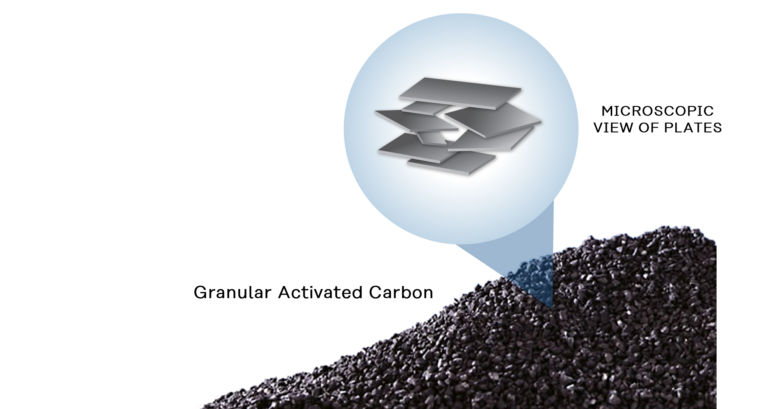
This graphitic platelet structure gives activated carbon its very high internal surface area. Activated carbon can have a surface area greater than 1000 m²/g. This means that only 5 gm of activated carbon has an internal surface area equivalent to a football field. This surface area enables activated carbon to adsorb various organic compounds from air, gases, and liquids.
What is Activated Carbon Made From?
Activated carbon can be made really from any carbon-containing starting material. However, the main requirement for a cost-effective product is that the raw material should have a high carbon content and be easy to source. The most commonly used raw materials are bituminous coal, wood, coconut shells, lignite and peat. The raw material selection is an important parameter as it will dictate the uniqueness of the final activated carbon.
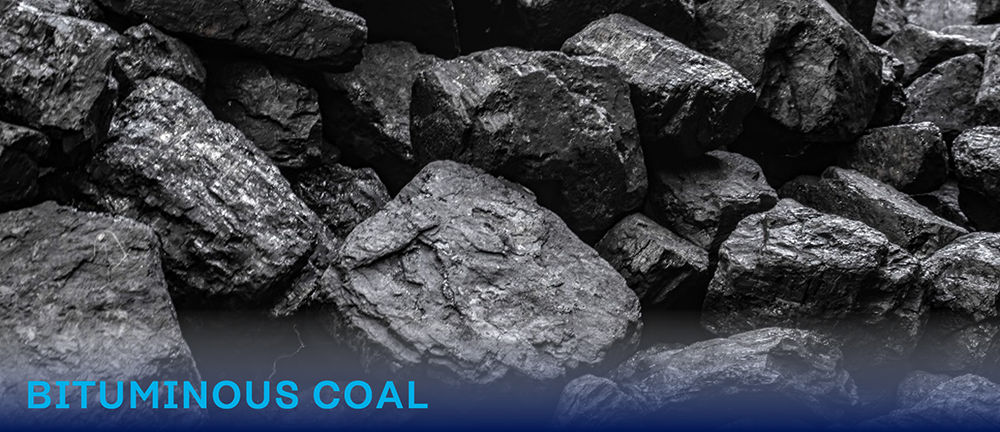
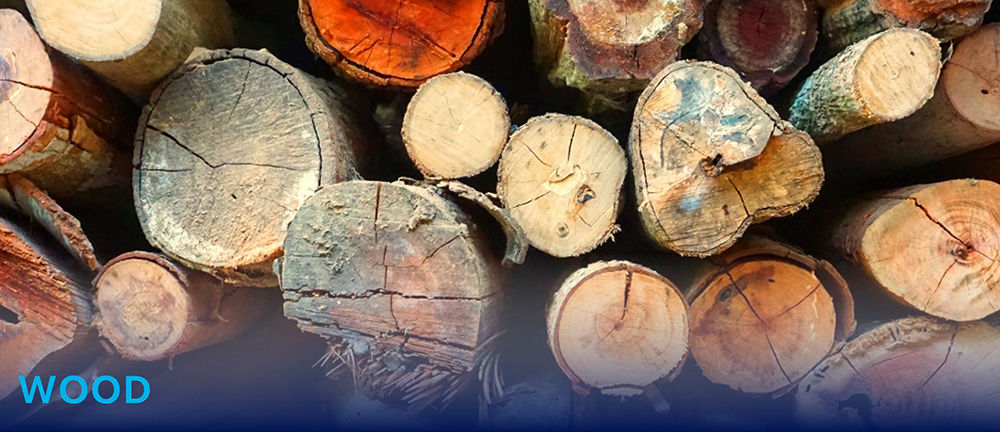
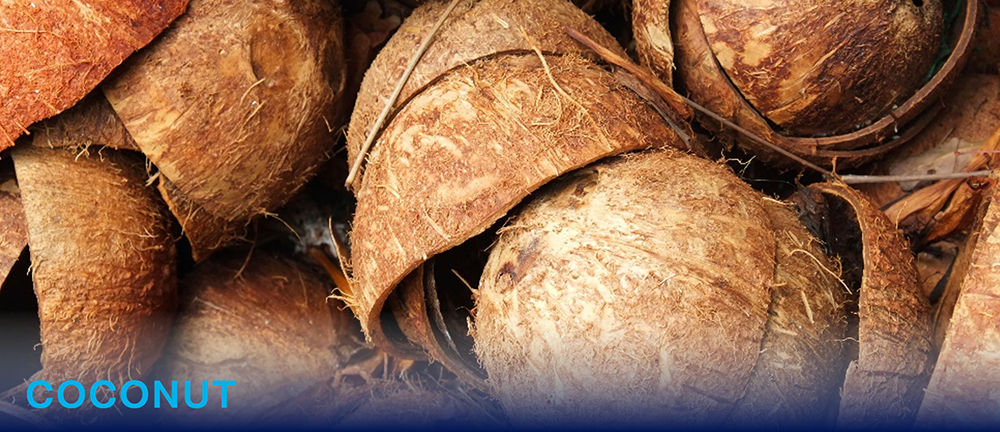
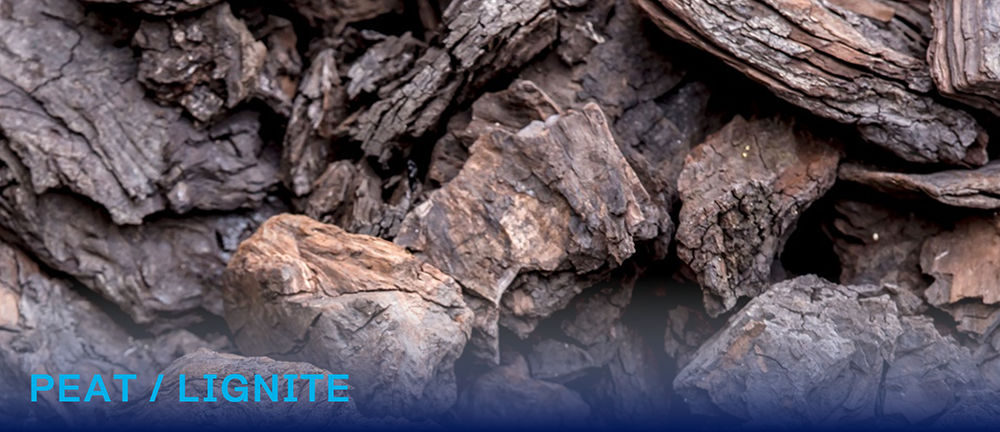
Activated carbon inherits properties from the original raw material and will dictate the uniqueness of the product and its adsorption capabilities. These are ash impurities, density, hardness or abrasion resistance and the transport pore structure which affects its performance kinetics.
The raw material selection, quality and the process to convert the carbon-containing feedstock into activated carbon, all have a significant influence on the final product properties.
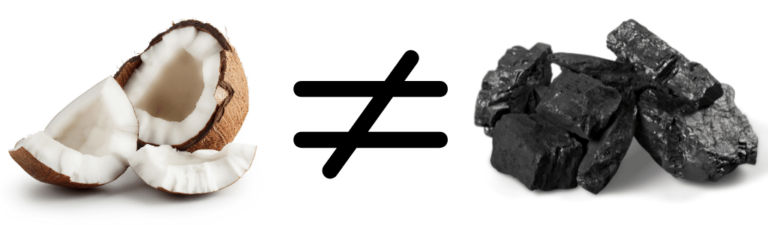
For example, bituminous coal and coconut based activated carbons have different physical properties and characteristics that provide performance advantages in different applications.
What are the Main Forms of Activated Carbon?
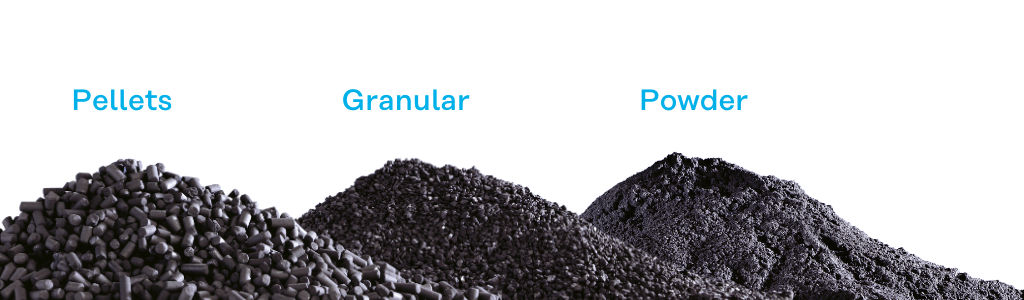
Not all activated carbon is the same and so the selection of the appropriate raw material, product form and properties is critical for each application. Activated carbon comes in many different forms which are primarily in the form of a granular product, a pelletized product or as a powder.
Granular Activated Carbon
Granular activated carbon is an irregularly shaped particle crushed from its raw material form and then sized to specific mesh sizes. The adsorptive capacity of GAC makes it ideal for removing contaminants from water, air, liquids, and gases. When granular carbon can no longer adsorb any more material, it is considered exhausted or spent. This spent granular carbon has the advantage that it can be recycled by thermal reactivation for reuse multiple times, instead of disposal.
Pelletized Activated Carbon
Pelletized activated carbon is produced by extruding the activated carbon into formed cylinders. The production process gives them high mechanical strength, uniformity of shape, and low dust content, making them more appropriate for removing contaminants from air and gas streams. Pelletized activated carbon is typically used for air and gas purification applications as low-pressure drops tend to be more crucial for these applications.
Powdered Activated Carbon
Powdered activated carbon is produced by pulverising a granular activated carbon feedstock or from fines generated during activated carbon production. The use of powdered activated carbons tends to differ from that of granular or pelletised carbons. They are typically applied in batch operations by dosing or added into a water or gas stream and are filtered out later after use. In the liquid phase, this is mostly in batch operations, where the powder dosage can be adjusted to suit the particular requirement.
Impregnated Activated Carbon
Certain compounds have a low adsorption capacity on the base activated carbon. Therefore, to enhance the carbons performance, finely distributed chemical solutions can be selectively added to the carbon surface to generate impregnated activated carbons. They are typically in pellet or granular shape. Impregnated carbons are primarily used in air or gas phase applications and usually for the removal of hazardous contaminants. The chemical impregnants that have been incorporated into the carbon can neutralize the adsorbed contaminants through a chemical reaction at its surface.
How is Activated Carbon Made?
There are several different ways to produce activated carbon, depending on the raw material.
Gas Activation
For gas activation method, any volatile organic content of the raw material is removed during a baking or carbonising stage to produce a char or charcoal. This char is then thermally activated in a furnace and screened to generate the final activated carbon.

Chemical Activation
For chemical activation, the dried wood based raw material is first treated with an acid, typically phosphoric acid and then thermally activated in a kiln. The resulting product is then washed to remove any remaining acid from the carbon.